Before the Travel News: Six Minutes on Local Radio and the Art of Not Sounding Like a Leaflet
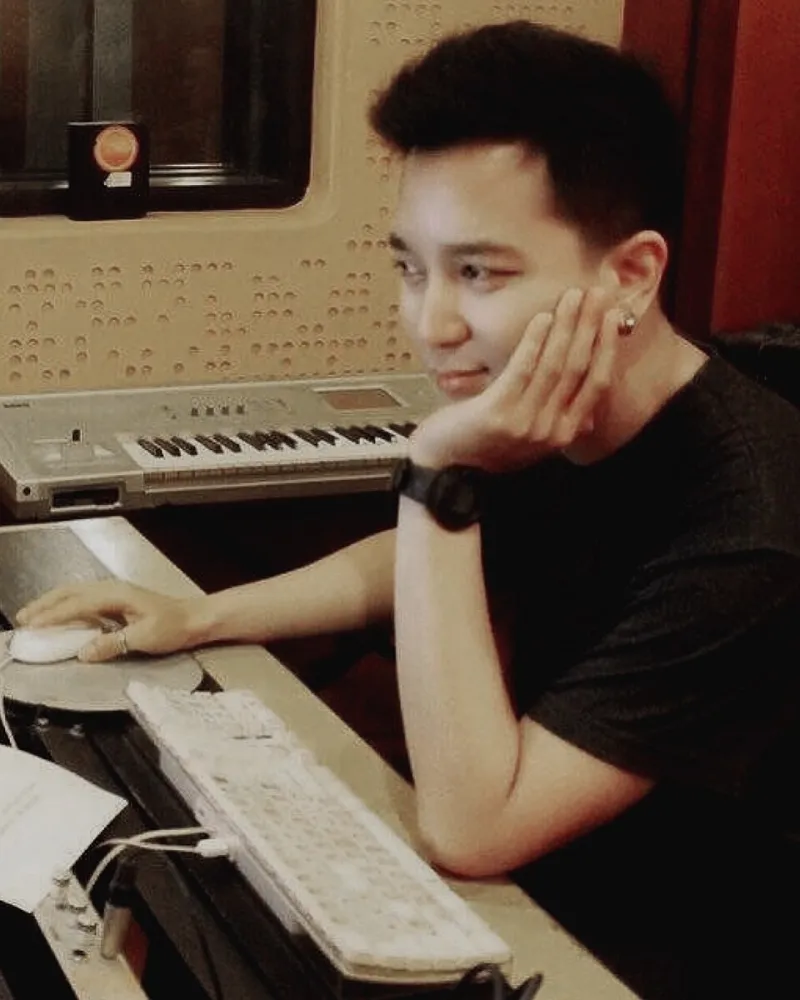
Photo: LarryLumelle, CC BY-SA 4.0, via Wikimedia Commons
The first time a community radio host asked me to explain my entire creative practice before the travel news, I had a laminated card in front of me and a voice in my head saying: do not say 'um'. I said 'um' four times in the first sentence. The travel news was delayed. Nobody died.
That was a few years ago now. I have since done a handful of local BBC interviews, a couple of community station spots and one very memorable phone-in where a caller asked whether my show was 'the one with the puppets'. (It was not.) I am not a media coach. But I have learned a few things about telling the truth quickly.
The clock is not your enemy
Six minutes sounds like a long time until you are in it. The host has a running order, a news bulletin, a weather update and a travel report. You are one item. The clock is not there to catch you out. It is there to keep the whole thing moving.
The mistake I made early on was trying to say everything. I wanted to explain the project, the funding, the community partners, the research, the puppets, the reason the puppets were not in this show, and the fact that I had once worked in a call centre. None of that is a six-minute interview. It is a six-part podcast.
Now I choose three things: what I am making, who it is for, and why I am making it now. Everything else is a bonus. If the host asks a question that takes us somewhere else, fine. But I know where the centre of the story is.
Rehearsing vs performing
The temptation is to over-rehearse. To write a script, learn it, and deliver it like a weather warning. I have done this. It sounds like a leaflet being read aloud.
The better approach, for me, is to rehearse the shape, not the words. I practise saying the three key things out loud in different ways. I do not memorise sentences. I memorise the order. That way, when the host interrupts or the travel news comes early, I can bend without breaking.
The best promotional interviews feel like conversations rather than adverts. That is not because the guest is effortlessly charming. It is because they are listening. They are responding to the host, not performing at them. If the host laughs, you can laugh. If the host asks a daft question, answer it properly. The daft questions are often the ones that let you sound like a human being.
What a good host actually needs
A good host does not need you to be polished. They need you to be clear. They need a sentence they can use in the intro, a story they can react to, and a reason for the listener to care. That is it. They are not judging your artistic integrity. They are trying to make a good hour of radio.
So give them the gifts: a short, plain description of what you do; one concrete detail (a number, a place, a person); and a simple way to find out more. If you can do that, you are most of the way there.
A short checklist for your first local radio interview
- Ask what time you are on, how long the slot is, and whether it is live or pre-recorded. Write it down.
- Ask if there is a producer you can speak to beforehand. If there is, use them. They want you to be good.
- Prepare three key points, not a script. Say them out loud until they feel natural.
- Have one concrete detail ready: a date, a venue, a ticket price, a number of workshops.
- Do not wear anything that rustles. Avoid noisy jewellery and crispy packets.
- Take water. Take a breath. If you lose your thread, say so and start again. Live radio is forgiving.
- Remember the listener is probably doing the washing up. They are not waiting for a lecture. They are waiting for something interesting.
The bit after the microphone goes off
The interview is not the work either. It is a few minutes of talking about the work. But it is a useful few minutes. It reminds you that other people can understand what you do, if you say it plainly. It reminds you that the thing you have been making in a small room for months can be described in a sentence that makes sense to a stranger.
And sometimes, after the travel news, someone texts the station to ask where they can see the show. That is not nothing. That is the whole point.
I still get nervous. I still say 'um'. But I have stopped trying to sound like a brochure. Six minutes is enough to tell the truth if you know which truth you are telling.