The Pinboard Has a Vote: What an Autumn Clear-Out Taught Me About Finishing
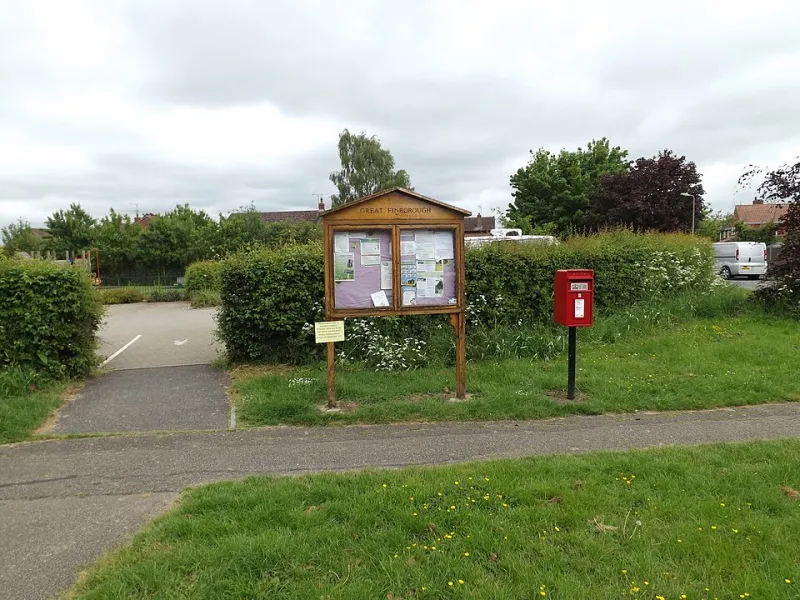
Photo: Geographer , CC BY-SA 2.0, via Wikimedia Commons
Last weekend I took everything off the noticeboard above my desk. Not in a dramatic, life-overhaul way. More in a 'the pile is now taller than the pinboard' way. I made a cup of tea, put on something with too many guitars, and started unpinning.
What came down was not just paper. It was a small, messy committee of invitations, half-plans, receipts, postcards, deadlines that had passed and ideas that had been waiting politely for months. The board had become a place where things went to be remembered and then quietly avoided.
I have always treated that board as background. It turns out it has a vote.
1. The invitation that was never a project
The first thing I unpinned was an invitation to a group show. It had a coffee ring on it and a handwritten note from someone I like. The date was long gone. I had kept it because it was proof of something: that I had been asked, that the work had been seen, that there was a conversation. But it was not a project. It was a memento.
That distinction is surprisingly hard to hold. We tend to treat every piece of paper as a task in disguise. But some things are just evidence that you were there. They do not need a next action. They need a folder, or a frame, or the bin. I kept this one in a small box labelled 'proof'. That felt better than leaving it to gather dust behind a takeaway menu.
2. The half-plan with no legs
There was a note that said, in my own handwriting: 'Podcast? Episode 4: the one about the thing.' I have no memory of what the thing was. I have a vague sense that it seemed urgent at the time.
This is the classic noticeboard trap: the idea that feels like momentum but is actually just a sentence. I have learned to ask whether a half-plan has legs. Does it have a date? Does it have a person attached to it? Does it have a next small action that could happen this week? If the answer is no to all three, it is not a project. It is a possibility.
Possibilities are allowed to stay as possibilities. That sounds obvious, but it is not how I used to live. I used to think every scrap of paper was a promise I had made to a better, more organised version of myself. The clear-out made me realise that most of those promises were never made out loud. They were just notes.
3. The thing that was actually done
Somewhere near the middle of the board was a ticket from a work-in-progress night I had forgotten about. It had a scribbled review on the back: 'too long, but the bit with the chairs works.' I remembered the night. I remembered the bit with the chairs. I had changed it, tested it, and moved on.
That is a finished thing, even though it never had a launch or a bow. Finishing does not always arrive with a fanfare. Sometimes it looks like a ticket stub and a note that says 'too long'. Sometimes it looks like the moment you stop opening the document.
I think we are quite bad at noticing our own endings. We wait for a ceremony, or a review, or someone to tell us it is done. But a lot of creative work finishes quietly, in the middle of a week, when you realise you have stopped meaning to go back to it.
4. The guilt pile
Then there was the guilt pile. A funding bid I did not send. A call-out I saved and then ignored. A postcard from a venue I meant to email. These are the things that make a noticeboard feel heavy.
I used to think the answer was discipline. Get up earlier. Be more efficient. Do the thing. But the guilt pile is not really about time. It is about obligation. Some of those things were never mine to carry. They were just opportunities that I had admired from a distance.
So I wrote a note on each one: 'Not this year.' Not 'never', necessarily. Just 'not this year'. Then I put them in an envelope marked 'maybe later'. It is a small ritual, but it works. It gives the idea a place to live that is not the centre of my eyeline.
5. The 2026 test
By the end, I had a small set of questions I was using without really meaning to. I will call it the 2026 test, mostly because it is 2026 and I like a label.
- Does it have a date?
- Does it have a person?
- Does it make me feel lighter or heavier when I look at it?
- Could I describe it in the past tense without wincing?
If it has no date and no person, it is probably a possibility. If it makes me feel heavier every time I see it, it is probably an obligation I have outgrown. If I can describe it in the past tense, it is probably done, even if it ended untidily.
None of these questions are foolproof. But they are better than leaving everything pinned up until it becomes wallpaper.
6. What stayed
When I finished, there were three things on the board. A postcard from a friend. A date for a meeting in December. And one blank index card.
The postcard is not a task. The meeting is a real thing with a person attached. The blank card is there because I like the idea of leaving room for something that has not happened yet. Not a half-plan. Not a guilt note. Just a space.
I used to think a clear noticeboard meant I was on top of things. Now I think it means I have made some decisions. The board has a vote, but I have the final say. This autumn, I voted for less paper and more room.