The Poster With Two Doors: What a QR Code Missed and a Phone Number Fixed
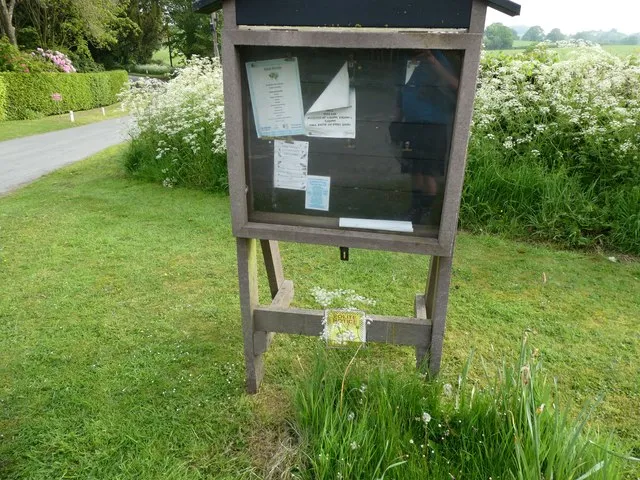
Photo: Jeremy Bolwell , CC BY-SA 2.0, via Wikimedia Commons
The poster looked smart. That was the first thing anyone said about it. A friend had designed it for me: a warm cream background, a lovely photo of the village hall with the lights on, and a QR code the size of a biscuit in the bottom corner. Underneath, in neat grey type, it said: Scan to reserve your place.
I was pleased with it. I felt modern. I felt like someone who had finally got their act together. I put copies in the library, the Post Office, the Co-op, the chip shop and on the parish noticeboard, and I waited for the bookings to arrive.
What arrived, mostly, was phone calls.
The Poster Was Polite, But It Was Also a Test
The first call came from a woman I vaguely knew from the WI. She had seen the poster in the library and wanted to come, but she did not have the thing that does the squares. She said it exactly like that. The thing that does the squares. Her phone, she explained, was for calls and for her granddaughter sending photos of the dog. It did not scan things, or if it did, she had never been shown how, and she was not about to learn in the library on a Thursday morning with a queue behind her.
Could she just give me her name and pay on the door?
Of course she could. But it stopped me in my tracks. The poster had felt like an open invitation to me. To her, it was a small locked gate. Not a rude one. Just a gate with no handle on her side.
By the end of the week, about half the people who got in touch had asked for a phone number instead. One man said his daughter usually did the online booking for him, but she was away in Leeds. Another said she did not like putting her card details into links she did not recognise, which is fair enough. Someone else said, simply, that they were 78 and preferred to speak to a person.
None of them were being difficult. They were telling me something useful. I had made a poster with one door, and I had assumed everyone would come through it.
What I Put on the Second Print Run
I did not throw the QR code away. I like a QR code. It is handy if you are standing at a bus stop and you want to book quickly. But it should not be the only way in.
On the second print run, the phone number went big. Not tucked away at the bottom in six-point type, but right there in the middle, in plain black figures. I added a short sentence underneath: Ring or text me and I will put your name on the list. No app needed. If I am teaching, leave a message and I will ring you back.
I also put a short web address in lower case, because sometimes people do want to type it in themselves. I kept the QR code, but I gave it a caption: Prefer to book online? Then I added a line that felt a bit obvious and a bit necessary: Pay what you can on the door. Cash or card.
That last bit mattered more than I expected. Several people told me they had assumed the event was sold out, or that they would have to pay upfront, or that it was one of those things where you have to commit. The poster had not said any of that. But it had not said the opposite either.
I made a plain-text A5 flyer as well, for the library window and the doctor's surgery. No photo. Just the facts in a large, friendly font: what it was, where it was, what time, how long, what it cost, whether there was step-free access, and how to book. It looked less exciting than the first poster. It also looked like something a person could actually read from a mobility scooter at the back of a queue.
The Night Itself
On the night, the door list was a mess in the best way. Some names had come through the online form. Some had come by text. One woman had written her own name and her neighbour's name on the back of a bus timetable and pressed it into my hand at the door. Another had rung and left a voicemail so long that it covered the entire plot of a film she had seen, and then her booking details right at the end.
Nobody minded. The room filled up. A man paid with a tenner from his coat pocket and apologised for not having the app. I said we had a card reader and a cash tin and a biscuit tin, and he looked relieved. A woman in the second row told me she had brought a printout of the poster with her, just in case, which made me laugh and then made me think.
Paper Is Not Nostalgia, It Is Infrastructure
I keep hearing that print is dead, or that everything should be digital by default. I understand the thinking. Digital is cheap and quick and reachable. But reachable to whom? A poster that only works if you have a smartphone with a camera, enough data, a charged battery, the confidence to scan an unknown code and the patience to fill in a form is not actually open to everyone. It is open to people like me.
Paper is not a nostalgic flourish. It is infrastructure. So is a phone number with a human being on the other end. So is plain text. So is a sentence that says you can just turn up.
The QR code did not fail. It just was not the only door. Once I put a second door in, people walked through it.
A Short Checklist for the Next Poster
I have written this down on the back of an envelope, which is where all my best systems live.
- Say what it is, where it is, when it is, how long it lasts and what it costs, in plain words.
- Put a phone number on it that gets answered, or a voicemail that tells people what to do next.
- Use a short web address you can read out loud without sounding like a robot.
- Keep the QR code if you like, but pair it with text. Never let it be the only instruction.
- Add the words: Ring or text to book. No app needed.
- Put posters where people actually wait: the Post Office queue, the library, the surgery, the bus shelter, the chip shop, the village hall porch.
- Make tear-off tabs if you can. People still love a tear-off tab.
- Before printing, ask someone who does not use a smartphone to read it and tell you what they think it means.
What I Know Now
Promotion is hospitality. A poster is the first hello. If the first hello says scan here and nothing else, some people will politely decide not to bother you. They will assume it is not for them. And you will never know they were interested.
The audience was never hard to reach. They were right there, holding a phone that makes calls, standing in front of a poster that had forgotten to mention it. Next time I will print two doors. Maybe three. The QR code can stay, a bit smaller, with a polite caption. The phone number gets the big font.
The kettle is on. The list is on a clipboard. The door is open, and there is more than one way to knock.