What the Library Window Knows That the Algorithm Doesn't
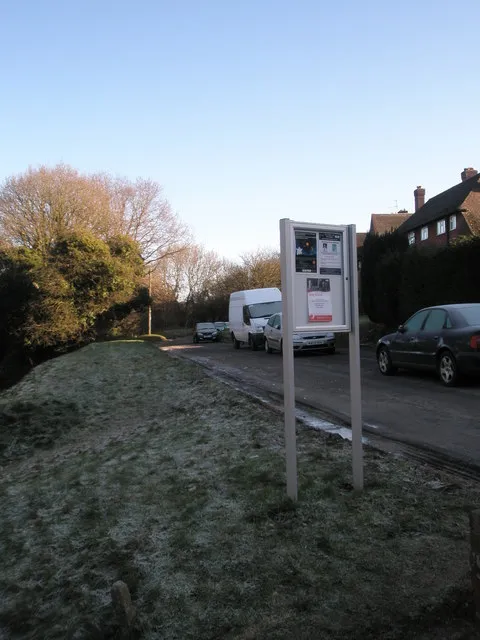
Photo: Basher Eyre , CC BY-SA 2.0, via Wikimedia Commons
On a wet Tuesday morning in November, I stood in a Post Office queue with a stack of A5 flyers and a shame I could not quite name. The flyers were for our next work-in-progress night at the community hall — the one with the tea urn and the folding chairs that do not quite match. I had already posted about it online. I had already sent the newsletter. Now I was doing the thing I had been putting off: asking the actual town I live in to come.
The noticeboard was a mess. In the best way. A yoga class with a phone number cut into strips. A missing cat called Biscuit. A council leaflet about bin collections. A church fete. A window cleaner who had laminated his details and then, for reasons known only to himself, added a photo of a Labrador. My flyer looked very ordinary next to all of it. That felt like useful information.
The noticeboard is a ruthless editor
Nobody lingers at a noticeboard. They glance while they are waiting for a parcel or sheltering from the rain. You get about two seconds. In those two seconds, your carefully written artist statement is not going to save you.
I watched people look at my flyer. Some did the polite nod. One woman read the whole thing, which made me want to hug her. A man in a fleece squinted at the QR code and then walked away. I do not blame him. A QR code on a noticeboard is a small act of optimism.
What worked was the simple stuff: the day, the time, the price, the fact that there would be cake. Work-in-progress night meant nothing to most people. Come and see four new things being tried out. Free. Tea included. Meant something.
What gets torn down (and what stays)
Over the next fortnight, I checked the board like a nervous parent. My flyer stayed up in the Post Office for nine days. The one in the library window lasted longer, mostly because the librarian took pity on it and moved it away from the draft. The one in the Co-op got covered by a poster for a school disco within forty-eight hours. The one on the village hall board was still there, but someone had drawn a moustache on the cartoon me. Fair enough.
The lesson was not flyers work or flyers do not work. It was that being seen is not the same as being broadcast. A noticeboard does not care about your follower count. It cares whether you have made it easy for a tired person to understand what you are offering and whether they can bring their mate.
The algorithm does not know your nan
Online, I can target people who like theatre, live within ten miles, and have shown an interest in experimental work. That is brilliant, in theory. But the algorithm does not know that my neighbour's nan goes to everything with a tea urn. It does not know that the woman who runs the library reading group is looking for something to do on a Thursday. It does not know that the man who took a flyer for his wife will actually come, and bring two friends.
The noticeboard is a slower, messier kind of targeting. It is local. It is physical. It relies on people being bored enough to read while they queue. And it has one huge advantage: it puts you in the same room as the people you are asking. Not metaphorically. Literally. The Post Office queue is a focus group with better biscuits.
A small, unglamorous campaign
I am not saying every creative project needs a flyer campaign. But I am saying that pinning those flyers taught me more about audience than any dashboard has. It taught me to write the thing plainly. To put the date bigger than my name. To accept that most people will ignore it, a few will tear it down, and one or two will turn up because they saw it while waiting for a parcel.
For the next work-in-progress night, I am doing it again. I have bought a slightly better stapler. I have put the QR code lower down, where a person can actually reach it. And I have added the words tea and cake in a font size that could be seen from space.
The library window does not know what a conversion rate is. It just knows whether someone stopped. That is still the test I want to pass.