The Adapter in the Wrong Pocket: Making a Show When the Tech Won't Cooperate
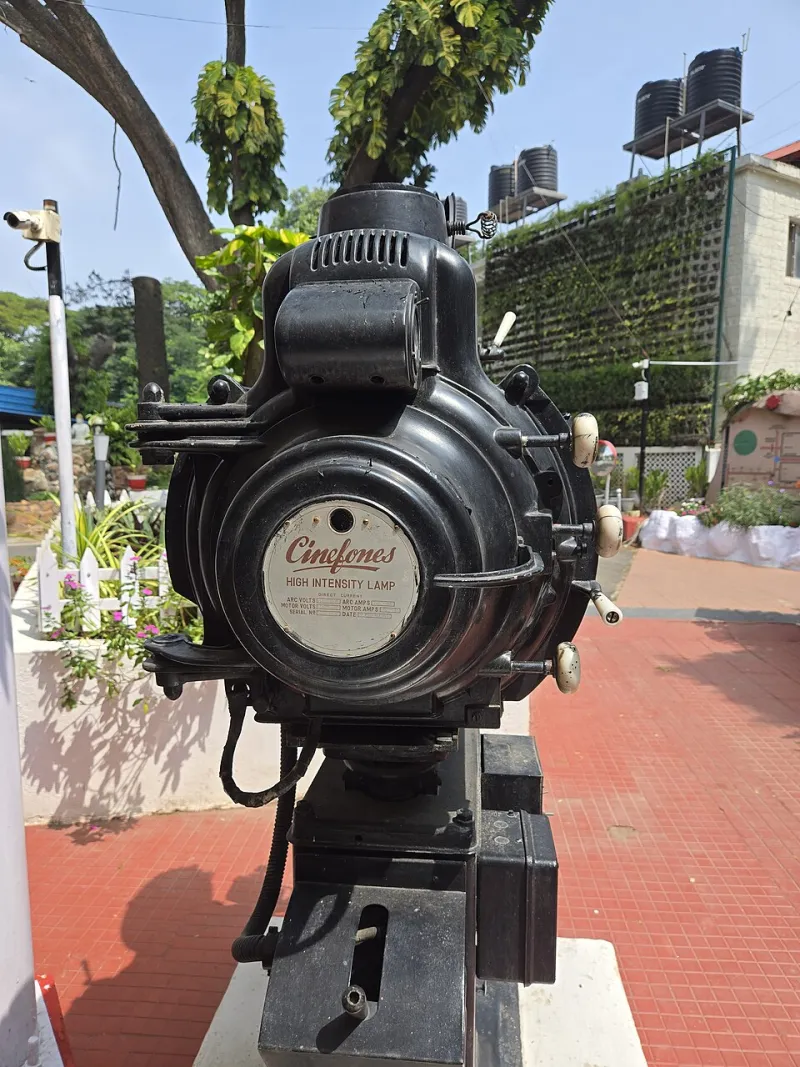
Photo: Shyamal, CC0, via Wikimedia Commons
The projector with one cable
The projector had one cable, a VGA connection, and a smell like a warm hair dryer. The laptop I'd borrowed had no VGA port, no HDMI port, and a battery life that was mostly a rumour. For about four minutes I stood in the middle of a village hall and did the thing I always promise I won't do: I looked at the audience as if they might have a spare adapter in their coat pocket.
They did not. What they had was patience, which is not the same thing but is just as useful if you don't waste it.
Check the boring things first
Old tech in a new room is usually not a mystery. It is a short list of things you forgot to check because you were thinking about the creative bit. Before anyone arrives, I now run through the following, in roughly this order:
- Power. Is there a socket near the projector, and has the caretaker shown you where the fuse box is?
- Cable. Does the projector lead actually reach the laptop, or does it need an extension lead you haven't packed?
- Adapter. HDMI to VGA, USB-C to HDMI, mini-displayport to whatever this venue has — bring your own and label it.
- Input. Find the source button before the room fills up. Learn what the menu looks like when it is working.
- Sound. If there is video, test the audio through the venue's speakers, not just the laptop's tiny ones.
- Resolution. A slideshow that looks fine on your screen can arrive on the projector with the edges chopped off.
- Offline copy. Put the files on the laptop as well as in the cloud. Wi-Fi in a church hall is a lovely idea and a unreliable colleague.
- Backup. A printed script, a PDF on a phone, and a version of the film that will play from a USB stick.
It is not glamorous. But five minutes of checking the boring things can save you from twenty minutes of apologising in front of a room that has already taken their coats off.
Build the version that works without the screen
The bigger lesson is not about adapters. It is about design. If the show dies when the Wi-Fi does, it wasn't a show; it was a browser tab. I try to make work that has at least two ways of being itself. A piece might use projection, but it should also be able to run with a live narrator and a few physical objects. A workshop might use slides, but the prompts should be printable. A film might be the centrepiece, but there should be a way to talk about it if the file won't open.
That doesn't mean dumbing down the tech. It means giving the audience something to hold on to when the tech becomes the least interesting thing in the room. The best moments in a small hall often happen when the screen goes dark and the person at the front says, right, let's do it this way instead.
The bit where you stop apologising
When something fails, the urge is to explain at length. I have done this. I have stood next to a frozen laptop and delivered a small lecture on the perils of borrowed equipment. The audience did not need that. They needed to know what was happening, how long it might take, and what we were going to do instead. A short, calm sentence is worth more than a long, anxious one.
Now I say something like: 'The projector isn't playing ball, so we're going to use the printed version for this bit. I'll come back to the screen later if it sorts itself out.' Then I move on. The room relaxes. The show continues. The adapter stays in the wrong pocket, where it belongs.
What old tech teaches
Working with ancient projectors and borrowed laptops is a good discipline for making things in small rooms. It keeps you honest about what the work actually needs. It makes you test the idea before you decorate it. And it reminds you that the audience came to be with other people, not to watch a cable do its job.
I still pack too many adapters. I still forget the extension lead. But I no longer design a whole evening around the assumption that the technology will behave. The show has to stand up when the screen doesn't. If it can do that, the tech becomes a bonus rather than a hostage situation.