The Message That Turns Up With the Spring Bulbs: Why a Small Show's Real Review Arrives Later
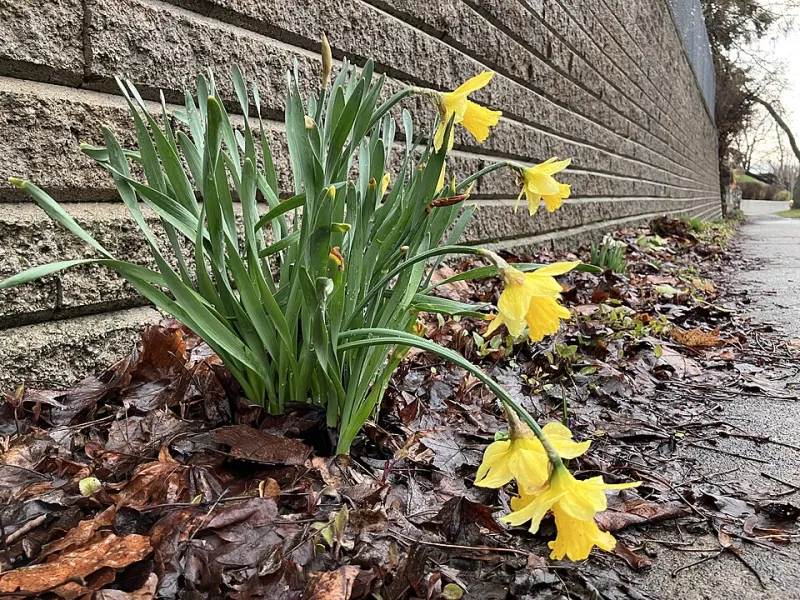
Photo: Gogerr, CC BY-SA 4.0, via Wikimedia Commons
The silence after the last chair
The chairs go back. The tea urn cools. Someone finds a glove under a table and holds it up like a small trophy. You go home with a car full of props and a head full of the things you would have done differently. And then, for a while, there is silence.
That silence used to worry me. I would replay the room and decide it had been fine but not special, or special but not useful. The feedback forms said nice things, the way feedback forms do. But they were written in the flush of the event, with a biscuit in one hand and a coat on. They measured the room, not the week after.
A message in March
Earlier this year, a message arrived in March. It was from someone who had come to a workshop the previous autumn. They said their child had been talking about one of the making prompts for months, and had started using it at home when things felt wobbly. They apologised for the delay. They said they had meant to write sooner.
There was no delay. That message was exactly on time. It had taken a whole winter for the thing to settle into their lives enough to be worth telling me about. If I had only listened in October, I would have missed it.
Applause measures the room
Immediate feedback is useful for practical things. Did the room work? Was the session easy to find? Did the tea arrive before the first activity? Those are real questions and I should keep asking them. But applause is a response to the moment, not a verdict on the work. It tells you that people were with you while they were in the room. It doesn't tell you what they carried out of it.
Slow feedback is different because it has been tested by ordinary life. It arrives after the school run, after a bad week, after a change of season. It is less polite and more specific. It often mentions a detail I had forgotten. That is the kind of review I want to collect, even if it never looks like a review.
Gathering later stories without a clipboard
I have learned not to turn every workshop into a survey. People can smell a feedback form from the other side of the hall. What works better is a light invitation, offered once and then left alone. At the end of a session I might say: 'If something from today stays with you, I'd love to hear about it — no rush, and no form.' I leave a postcard with a plain email address. I don't chase it.
When someone does write months later, I ask if I can keep their words. I explain how I might use them, and I don't assume consent just because they were kind enough to send a message. I keep a simple folder marked 'later' and drop those notes into it. Not for a report, necessarily. Just so I don't forget that the work has a life beyond the evening.
The metrics we can't put in a funder report
Funders need numbers, and I understand why. Rooms, attendees, ticket income, access costs — those things matter. But a small creative project is not only a set of numbers. It is also the thing someone mentions to a friend in March, the prompt a child uses when they are overwhelmed, the sentence a participant repeats back to you in a different context.
I try to hold both. I keep the spreadsheet. I also keep the later messages. They are not in competition. They are just on different clocks.
The review that arrives after the review
The applause is not the whole review. It is the first paragraph, written in the moment. The rest arrives later, sometimes with spring bulbs and an apology for the delay. When it comes, I try to remember that it isn't late. It is simply the work, still happening somewhere I can't see.