Before the Door Opens: Five Minutes With a Chair, a Light Switch and a Hearing Loop
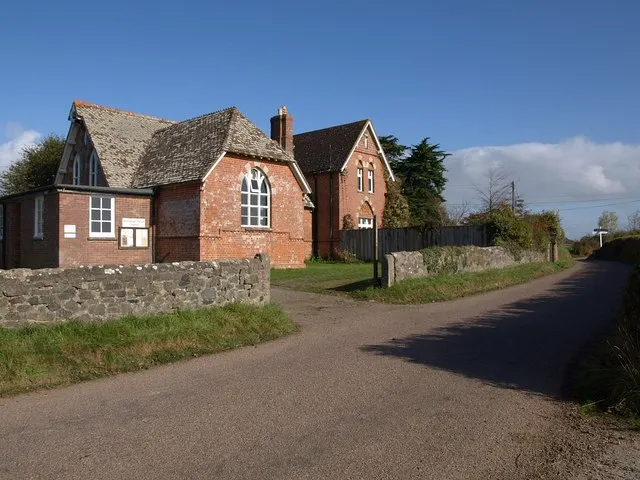
Photo: Derek Harper, CC BY-SA 2.0, via Wikimedia Commons
I once watched a woman spend four minutes trying to sit down. Not because she was slow, and not because she'd arrived late. Because the chairs in that hall had arms that curved inwards at the front, she had a bad hip, and there was no version of lowering herself into one of them that didn't look like a negotiation.
I was at the front with a clipboard, feeling the specific heat of knowing I'd picked those chairs. Except I hadn't picked them. They were what the hall had. But I'd walked past that stack a dozen times that morning, and not once had I thought: can everyone who's coming actually get into one of these?
That's how accessibility usually fails, in my experience. Not with a dramatic oversight, but with a small thing sitting quietly in the corner of the room, waiting to be noticed after the fact.
What a chair is actually for
The week after that afternoon, I rang the caretaker and asked what else was in the store cupboard. Turns out there were eight chairs without arms, a stack of firmer ones with a proper seat height, and two ancient things with padded arms that were frankly more comfortable than anything in my flat. All of it sitting there, unused, because nobody had ever asked.
So the answer isn't "get rid of the armrests". For a lot of people — anyone with a dodgy knee, anyone recovering from surgery, anyone who's pregnant or tired or eighty-four — arms are the thing that makes standing up possible. For others, arms are the thing that makes sitting down impossible. You need both, in the same room, within reach of each other.
That's the first lesson, and it costs nothing: don't set out one kind of chair. Set out two.
Walk in as if you've never been here
My five minutes starts outside, and it starts with pretending I'm a stranger. Stand twenty metres back on the pavement and look at the building. Can you see where the entrance is? Is there a sign, or just a fire door and hope? Is the path lit? Is there a dropped kerb, or does somebody have to go round by the road?
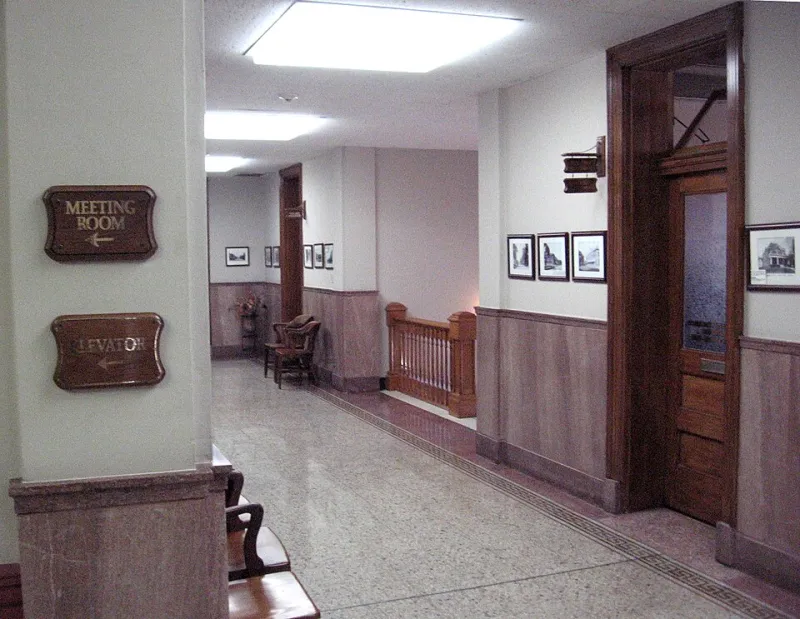
Then walk in through the actual door, at the actual weight of it, and pay attention to the first ten seconds. Heavy doors are their own small barrier. So is a lobby with three identical corridors and no arrows. So is a hall where the loos are behind an unmarked door that everyone already knows about, and therefore nobody thinks to label.
I carry a roll of paper and a marker pen now. Six sheets of A4 with a fat arrow and the word TOILETS is not glamorous, but it has solved more problems than any branding I've ever paid for.
The bit nobody tests
Hearing loops are where I've become genuinely sceptical. Plenty of halls have one. Very few have one that works, and fewer still have a sign up saying it exists, which means the person who needs it will assume it doesn't.
So I test it. I put the little receiver on, walk to the back, and get someone to talk at normal volume from the front. If there's no receiver, I ask the venue. If the venue doesn't know, I hire a portable loop for the evening and put a card on every chair saying it's available and who to ask. It's not a perfect solution, but it's an honest one.
Light matters just as much and gets thought about less. Fluorescent tubes that flicker behind a speaker's head. A window directly behind whoever's talking, turning them into a silhouette. A screen so dim that the front row is squinting. None of that shows up in the run sheet, and all of it decides whether people can stay with you for an hour.
Then I sit down
This is the part that sounds like a joke and isn't. I pick a chair with no arms, third row back, and I sit in it. Then I look forward and ask what I can see, what I can hear, and whether the person next to me could get past my knees without a scene.
I check that the aisle is a genuine gap rather than a maze. I check the tea table isn't parked where a wheelchair needs to turn. I check that the quiet corner — the one I've mentally designated for anyone who needs five minutes out — isn't right beside the kitchen hatch and the clatter of cups.
And I check the temperature, because a cold hall makes everyone leave early and no one ever tells you why.
Saying the true thing out loud
Here's where I've had to grow up a bit. Not every venue is going to be perfect. Some halls are Victorian, some have steps nobody can magic away, some have a hearing loop that was installed in another century and quietly gave up.
What you can do is stop pretending. Put a line in the joining instructions: the hall has two steps at the side entrance, ring me and I'll meet you at the car park. Say the room gets warm after an hour. Say there's a quiet room. Say you'll read the handout aloud if that's useful. That kind of plainness lands better than a glossy access statement that quietly overpromises.
And then write it down. I keep a scruffy notebook with a page per venue — which door sticks, which chairs to ask for, where the loop receiver lives, who to ring. It's the least glamorous document I own and the one I'd rescue from a fire.
The whole check takes about five minutes, and most of it is standing still, looking at a room as though I've never seen it before. Which, in a way, I haven't. I've seen it as the person who booked it. The trick is remembering that I'm not the one who has to get in and out of the chair.