One More Chair Than the Room Needs: Notes on Welcoming the Almost-Attendee
Photo: Chenspec, CC BY-SA 4.0, via Wikimedia Commons
Earlier this month I set out twelve chairs for a Tuesday evening workshop in a village hall. Nine people came. The three empty chairs didn’t bother me — no-shows happen, life happens, the 18:12 bus happens. What bothered me was the chair I’d put by the door. The spare one. The one I always put out, half as a joke, half as a habit, for the person who might turn up without booking.
The next morning, an email. A woman I’ll call Jan. She’d booked, she said. She’d got as far as the car park. Then she sat in her car for ten minutes, couldn’t work out which door was the right one, and drove home. “I didn’t want to walk into the wrong room,” she wrote. “So I didn’t walk into any.”
That’s the almost-attendee. Not the person who says no. The person who says yes and then gets lost in the last fifty yards.
The arithmetic of the almost-attendee
Most of us plan for the people who come. We count bookings, we set out chairs, we buy the biscuits. The almost-attendee sits outside that arithmetic. They’ve already done the hard bit — they’ve decided to try. Then a small practical fog rolls in: which entrance, which buzzer, which corridor, which face. The fog doesn’t feel small from inside it. It feels like evidence that you don’t belong.
After Jan’s email, I stopped seeing the spare chair as a nice gesture. I started seeing it as a test. If someone is standing in the dark, deciding whether to push a door, what is my room actually saying to them?
Travel notes that assume nothing
My booking confirmation used to say “village hall, 7pm.” That is not a travel note. That is a riddle with a postcode.
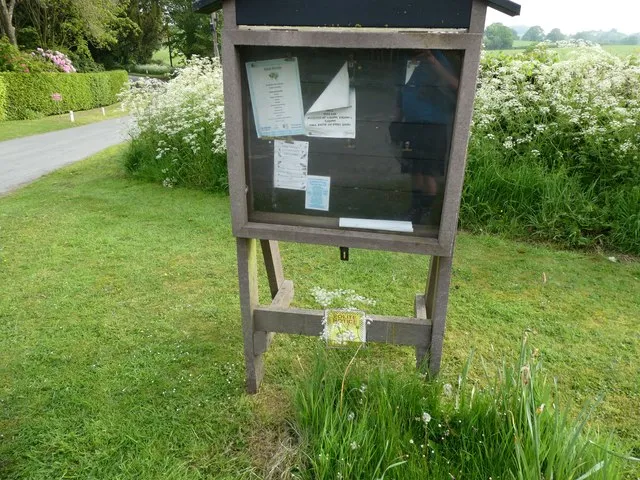
Now I write the last hundred yards. Which door — the one with the ramp, not the one by the bins. Where to park if the little car park is full. What the building looks like after dark: “the low brick building with the blue noticeboard, next to the playing field.” Which bus stops nearby and how often it runs back. Whether there’s a step, a heavy door, a corridor that looks like it leads somewhere private. Where the loos are.
None of this is glamorous. But if the instructions only work in daylight, they don’t work. A travel note is not admin. It’s the first part of the welcome.
A name at the door, not a clipboard
For years I thought “being welcoming” meant being visible and smiling. It turns out a named greeter does more than a general atmosphere. Someone who says, “You’re Jan? I’m Karen — I’ll show you where to put your coat,” removes the small performance of arrival. You don’t have to scan the room for a friendly face. The friendly face is at the door, expecting you.
I now put that role in the run sheet. It’s a job, not a vibe. It gets rotated, it gets thanked, and it gets ten minutes of thinking time beforehand: who might need walking in, who might arrive flustered, who might need to know where to sit without being asked.
The quiet corner that isn’t a punishment
Every room needs a place to land that isn’t the centre of the action. A chair slightly apart. A table with paper and pencils. A stack of books. Not a naughty corner — a decompression corner.
I say it out loud at the start now: “You can sit out, wander, take five minutes, leave for a bit. Nobody will chase you.” It sounds obvious. It isn’t. Lots of people have been to events where leaving the circle felt like a public statement. Permission has to be spoken, or the quiet corner just looks like furniture for the confident.
Icebreakers are not a personality test
I used to think a go-round was friendly. “Say your name and one interesting fact about yourself.” For some people that’s a nice warm-up. For others it’s a tax on their whole evening. The almost-attendee is often already spending energy on the door, the parking, the corridor. Asking them to perform on arrival can be the thing that tips them back out.
Now the icebreaker is optional or it’s the work itself. A prompt on the table. A pair-share for anyone who wants it. The chance to just listen. The work is the icebreaker. The tea urn is the icebreaker. The chair by the door is the icebreaker.
Hospitality is infrastructure
I used to file this stuff under “soft extras.” Nice if there’s time. But the travel note, the greeter, the quiet corner, the no-pressure start — they’re not decorations on the creative event. They’re the infrastructure that lets people take the creative risk in the first place.
So I budget for them now. I put them in the plan next to the running order and the risk assessment. I ask someone to own the door. I write the last hundred yards. I put out one more chair than the room needs.
Not as superstition. As a promise. The room has space for the person who is still deciding.