A Badge, a Biscuit and One Useful Conversation: Notes From the Back Row of a Community Arts Conference

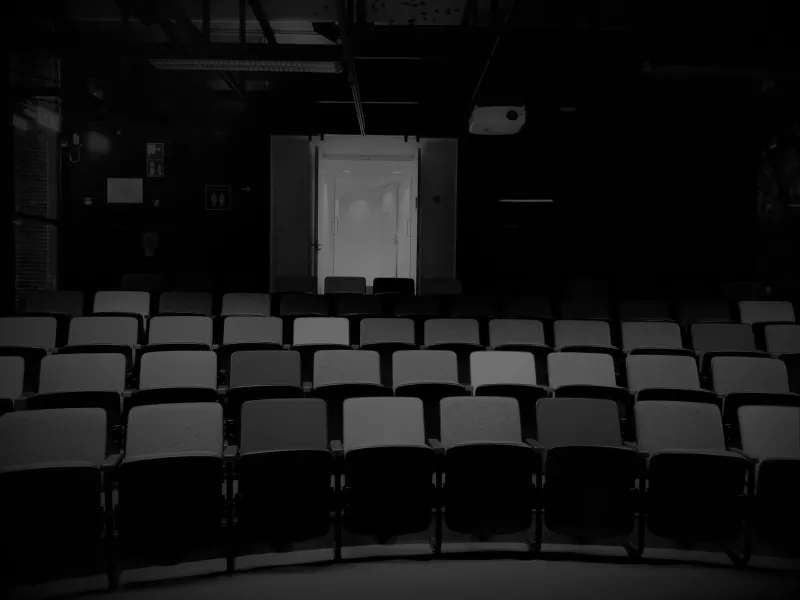
Photo: Wikilover90 and (original author Николай Погорелов [CC BY-SA 4.0 (https://creativecommons.org/licenses/by-sa/4.0)]), CC BY-SA 4.0, via Wikimedia Commons
I went to a community arts conference last week. I was not presenting. I was not on a panel. I was not staffing the sign-in desk, although the lanyard suggested otherwise. I was there as an independent maker with a notebook, a train ticket and a slightly optimistic expectation of free biscuits.
The biscuits were fine. The coffee was conference coffee. The lanyard was, as ever, a small badge on a string that made me look like I knew where the recycling bins were. I did not. But I did come home with something useful, and it was not the tote bag.
The Lanyard Problem
There is a particular look that comes over an independent maker at a conference. It is a mixture of curiosity and mild fraud anxiety. Everyone else seems to be attached to an organisation. They have job titles with words like 'strategic lead' in them. They know which breakout room is which. They are not standing in the main hall reading the programme as if it is a map of a foreign country.
I resisted the urge to pretend I was a delegate. I did not invent a line manager. I did not say 'we' when I meant 'me'. I did not nod along to a conversation about internal restructures as if I had ever been inside one. Instead, I wrote down the names of the people I wanted to hear and the questions I actually had. That helped. The lanyard did not make me staff. It just made me look like I might know where the toilets were.
Jargon, and How to Carry It Home
Community arts has its own language, and conferences are where it gathers. I heard 'participatory co-design', 'cultural ecology', 'place-based intervention' and 'impact narrative' before eleven in the morning. I also heard a phrase about 'unlocking the civic potential of the high street' that I am still trying to translate into something a village hall committee would recognise.
But here is the thing: not all of it was rubbish. The useful bits were the ones attached to a real example. A woman from a library service explained how they had stopped calling their evaluation 'feedback' and started asking people one simple question: what did you do differently afterwards? That was practical. I wrote it down. I can use that.
The performative bits were the ones where the jargon was doing the work on its own. If a panel cannot give me a single concrete example of what a phrase means in a room with chairs and a tea urn, I am allowed to let it drift past me. Sifting is a skill. I am getting better at it.
The Panel That Nearly Sent Me to the Coffee Queue
There was a panel on 'the future of community arts' that I nearly skipped. I am glad I did not, but I did leave halfway through the second speaker to get a coffee. The first speaker was good: clear, specific, a bit funny about funding forms. The second speaker was reading from a slide that had three fonts on it. I made a choice. I went to the corridor.
This is not a scandal. It is a conference technique. The corridor is often better than the panel. You hear the sentence that someone would not say into a microphone. You find out which room has the good biscuits. You overhear a producer saying, quite quietly, 'We have stopped trying to get everyone to the same thing at the same time. It doesn't work.' That was worth more than the plenary.
The Corridor Conversation
My useful conversation was with a community producer who had been doing this work for years. We were both waiting for the same coffee urn to recover. She asked what I made. I gave her the short version, the one I use when I am not trying to sound impressive. She nodded and said something I have been thinking about since.
'Stop designing for the room you wish you had. Design for the room you've got, then leave a note for the person who has to lock up.'
That was it. Not a framework. Not a funding stream. Just a sentence. But it changed how I work. I have started adding a 'lock-up page' to every project folder now: who has the key, when the alarm goes on, where the chairs go back, what to do if the caretaker has already gone home. It is not glamorous. It is the sort of thing that makes a show happen without a crisis. And it came from a corridor, not a panel.
What Actually Came Home With Me
I came home with three things I can use. The first is that evaluation question: what did you do differently afterwards? The second is the lock-up page. The third is a reminder that conferences are not a test. You do not have to attend every session. You do not have to understand every acronym. You do not have to pretend to be a delegate if you are an independent maker with a notebook and a train ticket.
I also came home with a free tote bag, which is now holding a pile of leaflets I will probably recycle. That is fine. The lanyard is in a drawer. The useful bit is the sentence I wrote down on the train home, before I forgot it.
A Small Checklist for Next Time
If you are going to a community arts conference as an independent maker, here is what I would say. Pick two sessions you actually want, not five you think you should want. Sit near the back if you need to leave. Talk to one person in a corridor. Write down one practical thing before lunch. Let the rest go.
And if someone asks what organisation you are with, you can just say, 'I'm independent.' It turns out that is a perfectly good answer. The lanyard does not make you staff. It just makes you look like you might know where the recycling bins are.