The Ten-Second Stall: What a Wet November Craft Fair Taught Me About Describing My Work
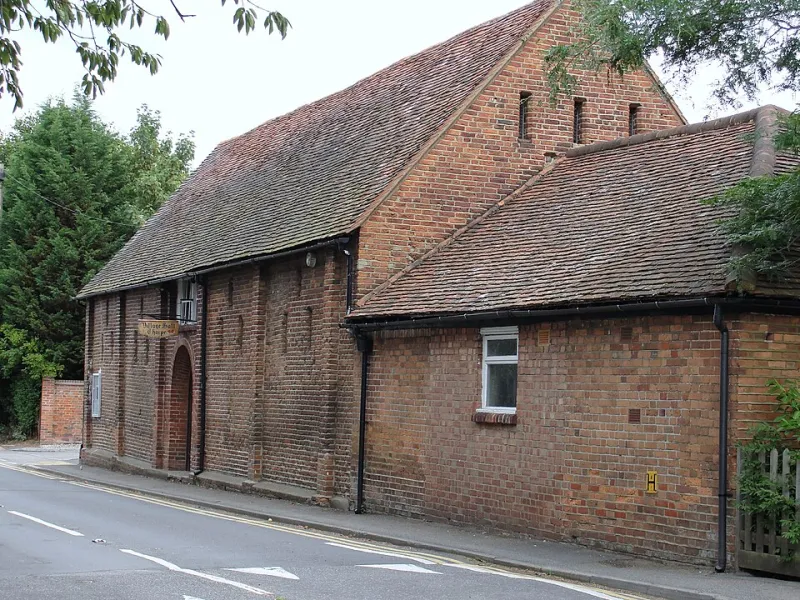
Photo: Maxwell Hamilton, CC BY-SA 3.0, via Wikimedia Commons
The table was fold-out, the hall was cold, and I had brought more than I needed. That is the traditional opening to any craft fair, I think. A week ago I took a stall at a local November fair — the kind with a tea urn, a raffle, and a woman near the door selling knitted angels. I had prints, small textile pieces, a few notebooks, and a flask of coffee that went cold before I remembered it. What I did not have was a decent way of explaining what I do. That turned out to be the useful bit.
The table that folds out and the question that does not
A fold-out table is a strange little stage. It is not quite a shop, not quite a studio, and not quite a conversation. People approach it sideways. They look at the work first, then at you, then back at the work. Eventually one of them says the thing. Not ‘What do you make?’ — that is too easy. They say, ‘So what is all this, then?’
I had prepared a paragraph. It was a bad paragraph. It had words like practice, interdisciplinary, and narrative inquiry in it. I heard myself saying it once and watched a man’s eyes drift towards the tombola. Fair enough. If I cannot explain it across a fold-out table, I need to look again at what I am doing.
By mid-morning I had cut it down. One sentence. Then a second sentence only if they asked. ‘I make work about ordinary places — the bits of a town people walk past. Prints, small textile pieces, sometimes a performance.’ That was it. The difference was not that it was simpler. The difference was that it was honest.
Ten seconds is longer than you think
I started counting, quietly, in my head. Ten seconds is quite a long time when someone is standing in front of you with a tote bag and a half-eaten mince pie. It is long enough to say what you do, why it matters to you, and then stop. The stopping is the hard part. I am a filler. I fill silence with caveats. I say, ‘It’s only small’ or ‘It’s not everyone’s thing’ before anyone has had a chance to decide for themselves.
So I tried a rule for the afternoon: no apologies in the first ten seconds. No ‘I’m afraid’. No ‘it’s just’. No ‘I don’t know if this is your sort of thing’. Just the work, and a question back. ‘Does this feel like anywhere you know?’ That one worked better than any speech. People like being asked what they see. It turns a stall into a two-way thing.
Pricing without the apology
I used to price as if I were asking for a favour. I would say the number and then immediately undercut it with my face. A wince. A little laugh. A ‘I know, I know’. It is not a good look. This time I wrote the prices clearly on a card and left them alone. When someone asked, I said the number and then said what it was for — materials, time, the bit that keeps the lights on. Not in a defensive way. Just as information.
One woman picked up a small framed piece, looked at the label, and said, ‘That’s very reasonable.’ I nearly said, ‘Oh, I can do it cheaper.’ I did not. I said thank you. That was a small victory. Later, a man asked if I did discounts for cash. I said no, but I could wrap it nicely. He bought it anyway. The world did not end. I have written that on a sticky note above my desk.
The quiet bits are part of the work
The quiet stretches between browsers are not dead time. They are the bit nobody photographs. I used to sit there feeling like a failed shop window. This time I took a notebook and wrote down the questions people asked. I sketched a sign. I mended a loose stitch on one of the textile pieces. I watched how people moved around the hall — which tables they slowed down at, which ones they avoided. That is research, whether I call it that or not.
I also learned to read the room better. Some people want a chat. Some want to be left alone with the work. Some are waiting for you to look up so they can ask a question without feeling foolish. A small sign saying ‘Happy to chat — or just browse’ did more for my nerves than any amount of positive thinking. It gave both of us permission.
What I changed when I got home
On Sunday I emptied the box and made three changes. First, I wrote a ten-second description of my work and stuck it inside the lid of the box. It will travel with me. Second, I made a proper price list with no apologies on it — just the numbers and a short line about what goes into the work. Third, I started a page in my notebook called ‘Questions From the Table’. It already has eleven entries. Some are practical. Some are the kind of question that makes you rethink a whole project.
The fold-out table test is not about being slick. It is about being clear enough that someone else can meet you halfway. A craft fair is a funny place to learn that. But then, most of the useful things I have learned about making work in public have happened in cold halls with a tea urn humming in the corner. I have already booked another one. I will bring the flask again. I will probably forget to drink it. But I will know what to say when someone asks.